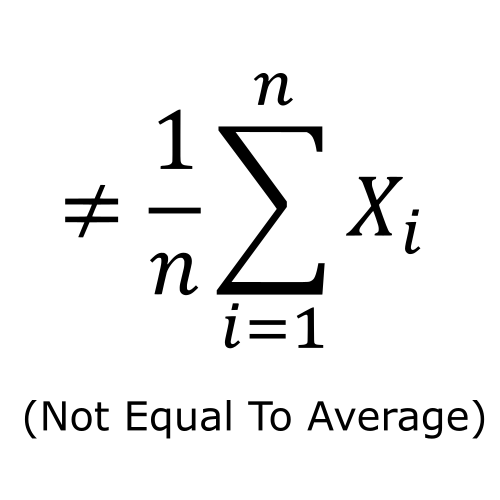

In the current landscape of digital tools, artificial intelligence has moved from a novelty to a necessity for many professionals. Whether you are "vibe coding" a new app to help with your favorite strategy game or generating high-end video content for a marketing campaign, AI is the engine driving modern productivity. However, there is a growing frustration among power users: the lack of transparency regarding what a subscription actually buys.
When you subscribe to a service like Netflix or Spotify, the terms are clear—unlimited streaming of a specific library for a set price. AI services, however, operate on a model of obfuscation. You are paying for temporary access to a data center’s hardware, but the "amount" of access you get is often hidden behind a veil of confusing terminology and moving goalposts.
The Hidden Architecture of AI Usage
At its core, AI usage is a measure of how much time and computational power you are allowed to borrow from a company’s servers. Because running large language models (LLMs) and video generators is incredibly expensive, companies must meter this access.
The problem isn't that limits exist; it’s that they are rarely defined in a way that allows a consumer to make an informed decision. Most services use a variety of metrics to track your activity:
- Credits: Often used for high-compute tasks like video or high-resolution image generation.
- Tokens: A technical unit representing chunks of text, used primarily in API settings but often underlying consumer limits.
- Message Caps: A limit on how many times you can prompt the AI within a specific window (e.g., 40 messages every three hours).
- Time-Based Access: Limits that reset weekly or daily, often without a visible countdown for the user.
Understanding these metrics is the first step in navigating the marketplace. For a deeper look at how to evaluate value in the digital and physical marketplace, see our A Beginner’s Comparison Guide: Navigating the General Marketplace for Quality and Value.
Credits, Tokens, and Tiers: The Language of Confusion
AI companies have developed a complex hierarchy of plans that make it nearly impossible to compare apples to apples. Take Google, for example. A Google Drive storage plan might include access to Gemini AI Pro, which grants the user 1,000 "Google Flow" credits per month. These credits are spent on Gemini’s video generation models, Omni and Veo.
While 1,000 credits might sound like a lot, without a clear conversion rate (e.g., "one second of video equals X credits"), the user is left guessing how long their "fuel" will last.
The ChatGPT Tier Maze
OpenAI’s pricing structure is perhaps the most prominent example of this obfuscation. Users can choose between ChatGPT Free, ChatGPT Go, and ChatGPT Plus. But for those who need more, there are even higher tiers like ChatGPT Pro 5x and Pro 10x.
The "5x" or "10x" refers to how much more usage you get compared to the Plus plan. However, because the Plus plan itself is marketed with nebulous descriptors like “expanded usage” rather than hard numbers, you are essentially paying $100 a month for "five times an unknown amount." This lack of concrete data makes it difficult for professionals to budget their time or their money effectively.
ChatGPT Plus Quickstart Guide fo...
For those in specialized fields, such as healthcare, understanding how to maximize these "unknown" limits is crucial for integrating AI into a daily workflow without hitting a wall mid-project.
The Stealth Price Hike: Why Limits Matter More Than Monthly Fees
In traditional SaaS (Software as a Service) models, a price hike is a public event that often draws criticism. AI companies have found a way to avoid this by manipulating usage limits instead of the subscription price.
Imagine if a streaming service allowed you to watch an "unknowable" amount of content based on the complexity of the show. If you watched a high-budget action movie, you might hit your limit faster than if you watched a low-budget sitcom. If you hit your limit, you’d have to upgrade or wait. By quietly lowering the "amount" of usage included in a standard plan, companies can effectively raise prices and push users toward $100+ monthly tiers without ever changing the $20 baseline price.
This creates a "black box" economy where the value of your dollar shifts based on the company's internal server costs and demand at any given hour.
The Arbitrary Nature of Usage Resets
Adding to the confusion is the inconsistent nature of usage resets. Many users have noted that since the launch of more advanced models like GPT-5.6, OpenAI has reset weekly usage limits multiple times outside of the standard schedule. While this feels like a "bonus" to the user, it further complicates the ability to track actual needs.
If your limit resets randomly, you can't accurately gauge if the Plus plan is sufficient or if you need to upgrade to a Pro tier. Furthermore, reports suggest that some companies are testing "paid usage resets," essentially allowing you to buy your way out of a lockout. This "pay-to-play" model mirrors the micro-transactions found in mobile gaming, a far cry from the professional utility most users expect from productivity software.
When setting up your professional environment, it's important to avoid these kinds of pitfalls. You can learn more about making smart choices in our guide on Common Mistakes to Avoid with General Home Setups and Product Selections.
Navigating the Fog: How to Manage Your AI Resources
Since the companies won't provide transparency, users must develop their own strategies for managing AI usage. Here are a few practical tips:
- Diversify Your Tools: Don't rely on a single AI provider. If you hit a limit on ChatGPT, having a backup like Claude or Gemini can keep your workflow moving.
- Optimize Your Prompts: The more "tokens" or "messages" you use, the faster you hit your limit. Learning to write concise, effective prompts can extend your usage window.
- Track Your "Heavy" Tasks: Note which tasks (like video generation or long-form coding) seem to trigger limits faster. Save these for when you know your limit has recently reset.
- Consider Local Alternatives: If you have the hardware, running an LLM locally on your machine removes all subscription limits. However, this requires a high-end GPU and technical know-how.
MASTERING JASPER AI FOR CONTENT...
For content creators, mastering these tools is less about the "limit" and more about the "quality" of output. Efficiently using AI allows you to stay under the radar of most usage caps while producing superior work.
Looking Forward: The Need for Transparent AI Billing
The current state of AI billing is unsustainable for a professional market. For AI to become a true utility, companies must move toward "transparent consumption" models. This could look like:
- Real-time Usage Dashboards: A clear view of exactly how many messages or credits remain in a billing cycle.
- Standardized Units: An industry-wide agreement on what a "token" or "credit" represents in terms of compute time.
- Tier Clarity: Replacing "expanded usage" with "X messages per 24 hours."
Until then, users are left to navigate a landscape where they are paying for a service without a clear understanding of its boundaries.
While we wait for the digital world to catch up with transparent billing, many find that returning to physical planning tools helps manage the chaos of multiple subscriptions and shifting deadlines. A high-quality physical planner can be the anchor in a sea of "unknowable" digital limits.
Conclusion
The AI revolution is here, but its business model is still in its infancy. As users, we are currently paying for the privilege of testing these models, often without a clear contract of what that payment entitles us to. By understanding the ways companies obfuscate limits—through credits, arbitrary resets, and nebulous tier descriptions—we can better position ourselves to use these tools effectively.
Ultimately, the power of AI is undeniable. But until the industry embraces transparency, the most important "prompt" you can learn is the one that asks: "What am I actually paying for?"